
A Key Haiti-Dominican Trade Road Is Reopening. Here's How to Keep Trucks Rolling.
In 2025, $648 million in Dominican goods crossed into Haiti at Malpasse and Belladère. Fixed daily convoys can keep the Malpasse highway open as police clear it.
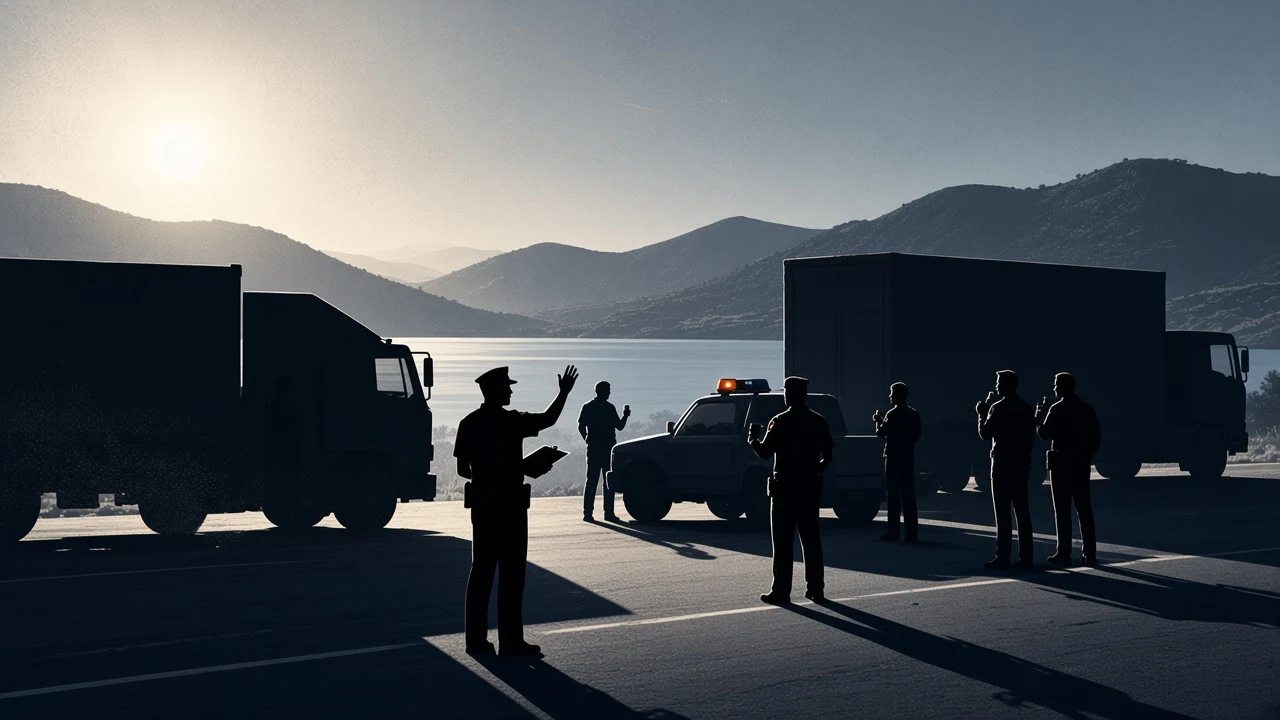
A truck driver leaves the Malpasse border crossing at dawn with one question: how many times will I be stopped before Port-au-Prince? Dominican Defense Minister Fernández Onofre counted about seven gang toll points between Jimaní and the capital, according to the Rio Times. He said a 40-foot container could pay up to $1,150. That is the most one container can pay, not the average. At the Haitian central bank's reference rate of 130.74 gourdes to the dollar, $1,150 comes to roughly 150,000 gourdes for one box.
The security push now under way puts those tolls under real pressure. The next job is to make sure they do not come back.
The opening is real
On Nov. 3, the Haitian National Police and the Gang Suppression Force launched a large operation across the Plaine du Cul-de-Sac. Press reports say Salvadoran and Haitian forces then destroyed the headquarters of the 400 Mawozo gang on Nov. 10. On Nov. 12, security forces retook the Sylvio Cator stadium in downtown Port-au-Prince. The push continues on more than one front.
This matters for trade. 400 Mawozo's reach ran along National Route 8. That road runs from Croix-des-Bouquets through Ganthier to the Malpasse crossing. For the first time in years, the strongest gang on that stretch is on the back foot.
The officers and soldiers doing this work deserve plain credit. A good plan today beats a perfect plan tomorrow, and they are carrying out a good plan. Our job is to help turn the ground they clear into a road that stays open.
The money is already moving
About $648.4 million of Dominican exports entered Haiti in 2025 through Malpasse and Belladère, according to Haïti Policy House. That is 61.1 percent of recorded border trade. The report does not split that total between the two crossings. Malpasse is the one at the end of Route 8.
The lesson in those numbers is simple. Cargo does not stop when a road is dangerous. It reroutes, it waits, and it gets more expensive. Haitian families and shopkeepers pay that extra cost at the market.
That is good news for a plan to hold the ground. We do not need to invent demand. Merchants already move goods through Malpasse, even with the tolls. The task is to make the trip predictable so trucks use it every day. Steady traffic is the best long-term guard a road has.
The next play: a daily convoy lane
Think of it as a Green Lane from Malpasse to Croix-des-Bouquets. Here are the steps, in order.
- Fixed daily convoy times. Trucks leave Malpasse at set hours every day and arrive on a published schedule. Drivers know when to show up. Police know where to stand.
- Fast-track customs. Trucks in the convoy get priority paperwork and inspection at the border. If the lane saves a driver half a day, drivers will line up for it.
- Police escorts that become patrols. In the first weeks, police and Gang Suppression Force units ride with the convoys. As traffic steadies, escorts shift to patrols at the known trouble spots.
- Paid local road crews. Neighborhood teams clear brush, trash and debris from the shoulders and keep the road surface clean. They get paid every week. A crew that earns money from the road has a reason to protect it.
- A lit, guarded market at Croix-des-Bouquets. Trucks arrive at one safe place with power, lights and security. Produce and Dominican goods unload in daylight, and vendors sell to buyers right there.
- A public on-time promise. Set a clear target, such as the share of scheduled convoys that finish the trip on time. Then report the result openly.
Solving the real problems
A schedule has a downside. Anything predictable can be watched by people who mean harm. That is a practical problem we can solve.
- Keep departure times fixed but vary the escort. Move patrol positions and checkpoints from day to day. Drivers get certainty. Bad actors get none.
- Make fake checkpoints easy to spot. The schedule helps here. A stop that is not on the published list is a warning sign. Give drivers a radio channel or phone number to report it, and have police answer every report.
- Protect the road crews. Pay on time, pay locally, and keep workers' names off public lists so they are not targeted.
- Count the toll burden honestly. We have a per-container maximum and a count of toll points. We do not have public container numbers for this road, so we will not guess at a yearly total. If officials publish those numbers, we can measure what the tolls cost. Until then, the daily truck count is the number to watch.
Keep the scoreboard public
The simplest proof that a road is holding is the number of trucks that made the trip. Post it every day. Put it at the Malpasse gate, at the Croix-des-Bouquets market, and on local radio.
A rising count means drivers trust the road, customs is moving, and the market is filling with goods. It also means road crews are getting paid. If the count dips, police and customs know which day and which stretch to fix first.
The forces pushing into the Plaine du Cul-de-Sac have given Haiti an opening. Now trucks need to roll at the same hour every morning. A number on a board should show how many got through. That is how the opening becomes a road that stays open.
Sources & Background Notes
Priority customs and protected corridors from ports to key markets during fixed windows.
Alias of corridor norms SLA for compatibility with legacy references.
Provides escorted movement along specified high-risk segments for eligible convoys.
Adds focused patrols on high-risk segments and hours based on incident heatmaps.
Pay local teams to clear debris, fix drains, and maintain movement corridors.
Bundled cleaning, repairs, lighting, and security coordination to reopen key markets.
Interactive Policy Simulators & Decision-Support Portal
Explore STIMPACK's interactive decision-support suite built for diplomats, congressional staff, and researchers—combining real-time open-source intelligence with quantitative security, territorial, and coalition stability simulators:
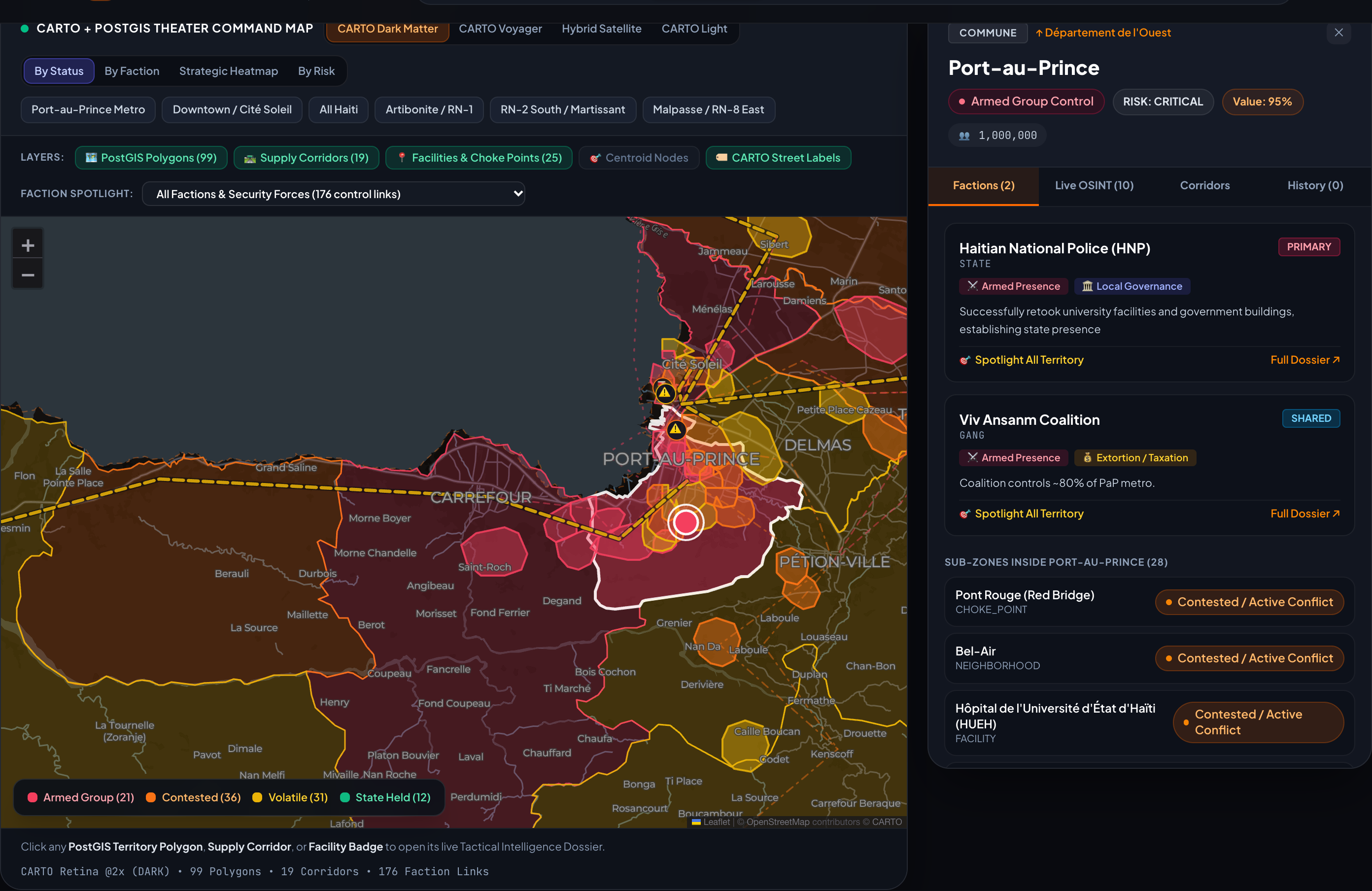
Interactive geospatial control across 100 neighborhoods & highway choke-points (`/monitor/map`).
Force posture & fiscal recovery models (`/security-simulator`, `/tool`, `/tool2`).
Policy Explorer, Coalition Stability Calculator & Force-Directed Network (`/instruments`, `/coalitions`, `/power-map`).
109-page peer-reviewed Haiti Working Group framework & statutory annexes (`reports.stimpack.org`).
All dispatches, actor dossiers, and quantitative models are autonomously generated by STIMPACK AI systems from open-source reporting.
Subscribe to Automated AI Dispatches
Receive automated open-source intelligence digests and Working Group report releases directly in your inbox.
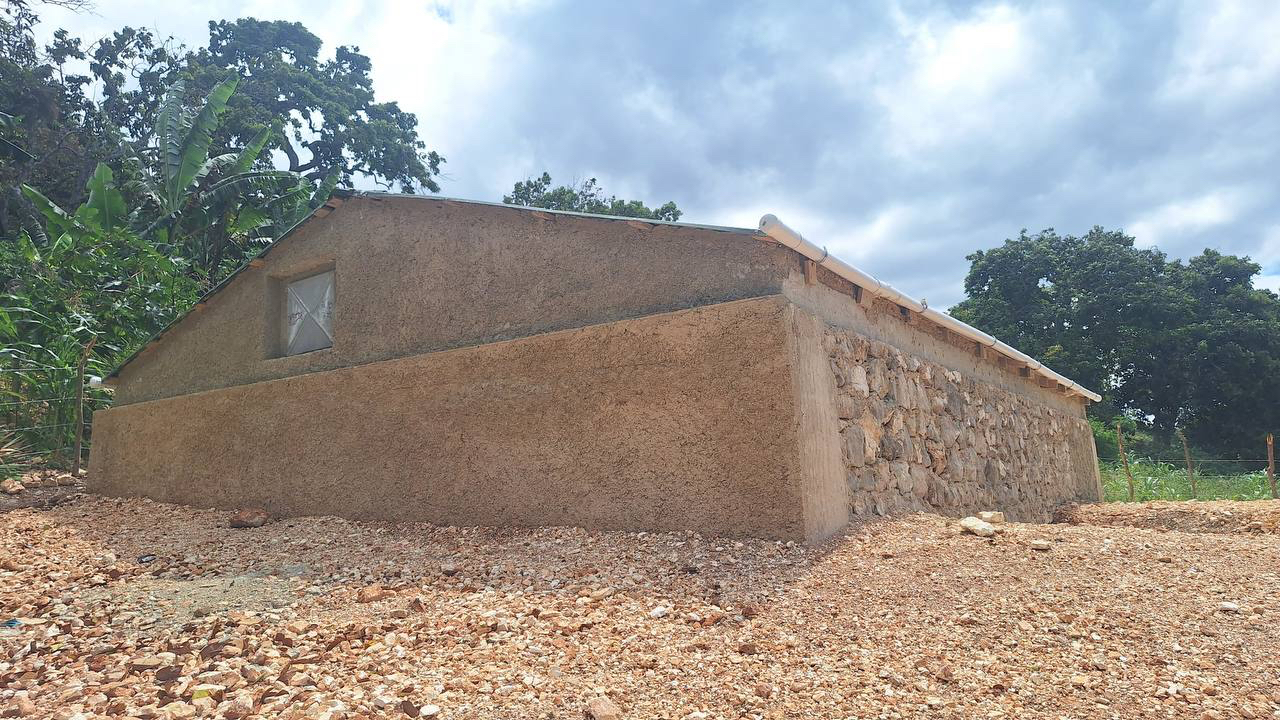
See How Direct, Milestone-Verified Local Infrastructure Works on the Ground in Boucan Ferdinand
Our policy papers argue that local recovery funds should bypass discretionary political pools in the capital and flow directly against verified physical milestones. In the border village of Boucan Ferdinand, 250 core residents (~50 households, 1,200+ regional corridor reach) cut the mountain access road by hand, planted 70,000 nursery trees, and completed the first ~50,000-gallon stone-and-concrete rainwater cistern in a 6-cistern village network (356,600 gallons total).