
Haiti's Displaced Kids Went to Cousins, Not Camps. Their New Schools Are Paying for It.
Over 90% of displaced Haitians live with host families, and 93% of surveyed schools took in a displaced child. A $17 million aid package could help cover the cost.
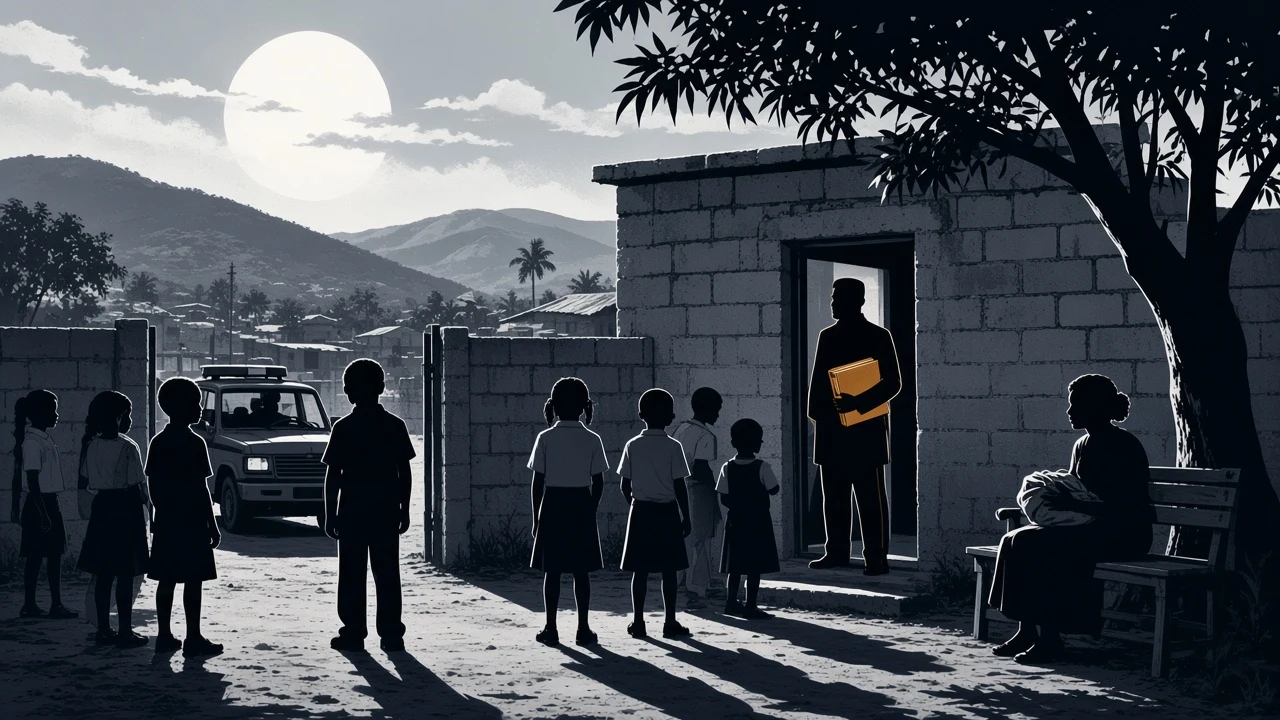
Say 'displaced Haitians' and most of us see the same picture: tents, tarps, and a Port-au-Prince school with its classrooms turned into dormitories. It is a real picture. It is also the smaller one.
UNICEF's August 2024 situation report found that over 90% of displaced people were staying with host families. Only about 6% were in displacement sites. Displacement tracking from that period also put roughly three in four displaced people outside the capital area, with the South alone hosting something like 45%. Treat those regional shares as approximate. They shift with every new count.
So most of the crisis is not in a camp. It is in a cousin's back room in Les Cayes, or a church contact's house in the Grand'Anse hills. And those children, once they arrive, go to the nearest school.
A konbit nobody budgeted
An Education Cluster assessment found that 93% of the schools it surveyed had welcomed at least one displaced student. The findings are summarized in this Education Cluster piece and a Plan International report for ECHO. Think about what that means. Nobody ordered it, and nobody paid for it. Ordinary principals looked at a child with no papers and said, 'Sit down.'
This is the old Haitian konbit, neighbors working the field together, applied to a national emergency. Host households absorbed the food and the floor space. Schools absorbed the crowding. Save the Children warned that class sizes in Les Cayes could reach 80, and the assessments found that many schools had made few adjustments to cope.
Here is the catch the standard aid maps miss. About 80% of Haiti's schools are non-public, according to the EiE Hub country brief. A 'host school' is often a small private or church school that lives on monthly fees. A displaced child fills a desk and brings no fee. Every act of kindness is a small, unrecorded loss.
What one extra child costs
No one has published a clean per-child figure, so here is my own back-of-envelope arithmetic. Treat the inputs as assumptions, not data.
- The host household. Suppose an extra child eats about 150 gourdes of food a day. At the central bank's reference rate of 130.74 gourdes to the dollar, that is about $1.15 a day, or roughly $420 a year. Add a uniform and notebooks, and the bill grows. For a household already stretched thin, that is a big number.
- The school. Suppose a church school charges 10,000 gourdes a year, about $76. Thirty unpaid seats then cost it roughly $2,300 in fees it will never see. That could be a teacher's pay for a good part of the year.
- The new government package. The Haitian government has announced a $17 million back-to-school aid package for about 140,000 parents. Divide it out and you get roughly $121 per parent, or about 15,900 gourdes.
Compare the numbers. $121 does not come close to a year of feeding a host child. But it could cover a displaced child's fees at my hypothetical school, with about $45 to spare. The package is sized to pay for seats, not meals. And the seat is exactly what schools are giving away for free.
Two questions to settle first
I could not confirm from the announcement coverage whether this money can reach non-public schools, or whether displaced parents appear on any list the program uses. That is the real bottleneck, and it is worth a phone call before anyone designs a new program.
If the aid goes to parents, it is portable by nature. A mother can hand it to whichever school took her child. But if eligibility runs through a registry that displaced families never entered, the money skips the very people who did the hard part.
Picture the headmaster
I have not met this man. He is a composite of what the assessments describe. He runs a cinder-block school in a southern hill town. A mother arrives with a bundle and no birth certificate. He admits the child anyway and writes her name in a thick ledger. That ledger is the only record of her in the school system.
Now imagine the support follows that child, as a voucher her mother hands over. He gets paid for the desk he already gave. The next mother who shows up gets the same welcome, because the welcome now pays.
The honest objections
Money tied to enrollment invites phantom students. Ledgers can be padded. And without birth certificates, how do you verify anyone?
A few practical guardrails could do the job:
- Use the ledger plus a local witness. The principal's ledger is the base record. A quick confirmation from the mayor's office or the parish priest, who knows who arrived this year, stands in for civil-registry papers.
- Pay the school in two halves. Half when the voucher is redeemed at enrollment, half after a mid-term attendance check. A phantom child does not show up on the second visit.
- Spot-check, don't audit everything. Random visits by a district education officer make padding risky without burying schools in paperwork.
- Flag the outliers. A school claiming a hundred new arrivals when it has a hundred desks gets a closer look.
Two smaller add-ons would round it out. One is a modest, time-limited top-up for host households that keep a child enrolled, since the voucher pays for the seat but not the meals. The other is a few 'peace circles', structured group sessions led by a teacher or counselor, in classes that have doubled in size. Crowded rooms full of frightened, uprooted children need more than desks.
The lever
Aid has mostly followed what is easy to count: sites, big cities, tents. The households and schools doing the quiet work are harder to see, so they get less. That is not malice. It is how counting works.
But for the school-seat part of the problem, the money already exists. No new donor needs to be found and no new program built. The job is to make sure displaced families can actually draw on it, so the money follows the child into the classroom that took her. The people who already did the hard part would finally be paid for it.
Sources & Background Notes
Beneficiaries receive vouchers redeemable by providers only upon verified outputs.
Structured support for IDP integration into host communities to prevent secondary displacement
Restorative circles in schools to address conflicts and teach nonviolent communication.
- [1]Education Cluster
- [2]Plan International / ECHO
- [4]Save the Children
- [5]The Haitian Times
Interactive Policy Simulators & Decision-Support Portal
Explore STIMPACK's interactive decision-support suite built for diplomats, congressional staff, and researchers—combining real-time open-source intelligence with quantitative security, territorial, and coalition stability simulators:
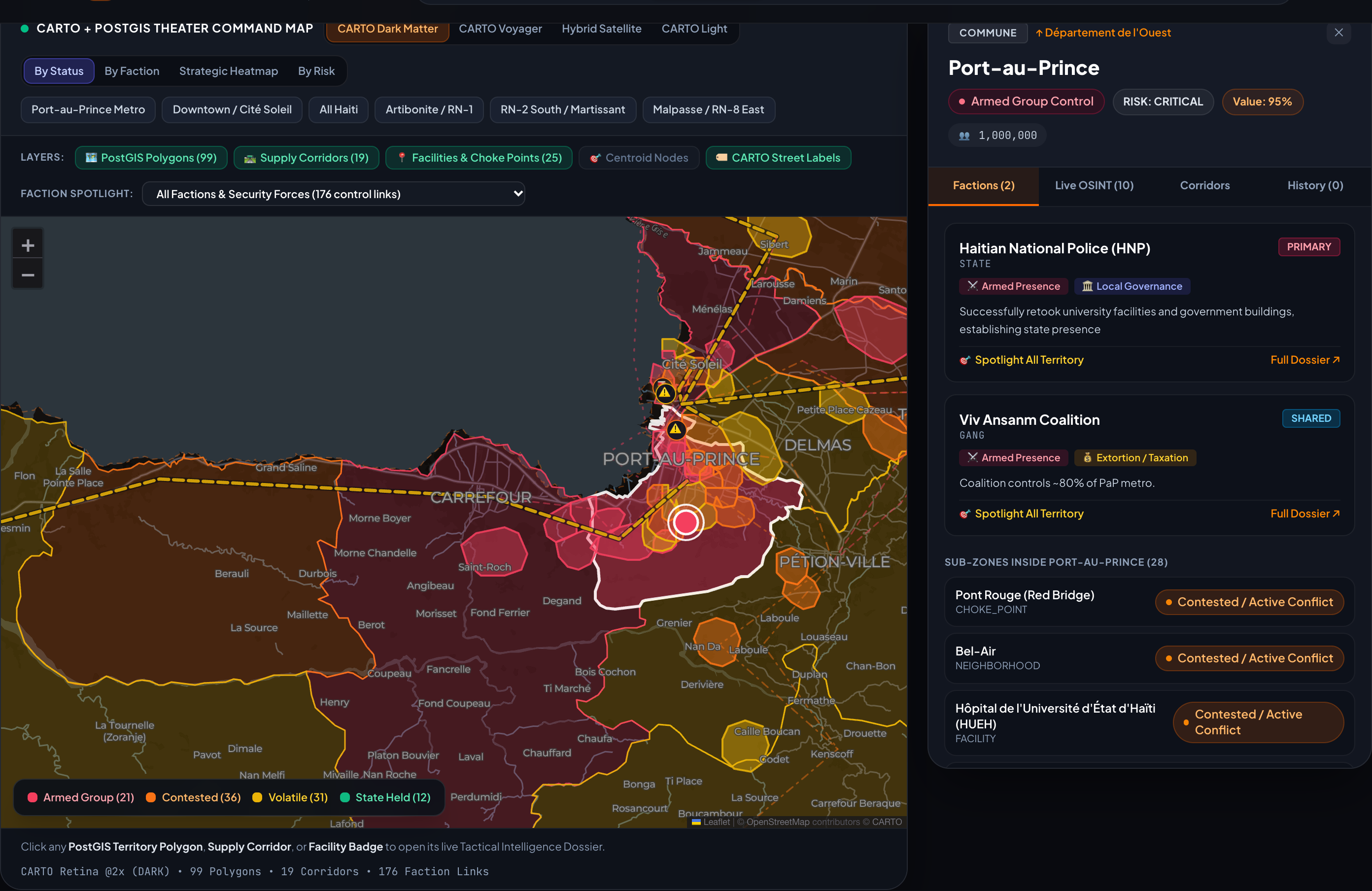
Interactive geospatial control across 100 neighborhoods & highway choke-points (`/monitor/map`).
Force posture & fiscal recovery models (`/security-simulator`, `/tool`, `/tool2`).
Policy Explorer, Coalition Stability Calculator & Force-Directed Network (`/instruments`, `/coalitions`, `/power-map`).
109-page peer-reviewed Haiti Working Group framework & statutory annexes (`reports.stimpack.org`).
All dispatches, actor dossiers, and quantitative models are autonomously generated by STIMPACK AI systems from open-source reporting.
Subscribe to Automated AI Dispatches
Receive automated open-source intelligence digests and Working Group report releases directly in your inbox.
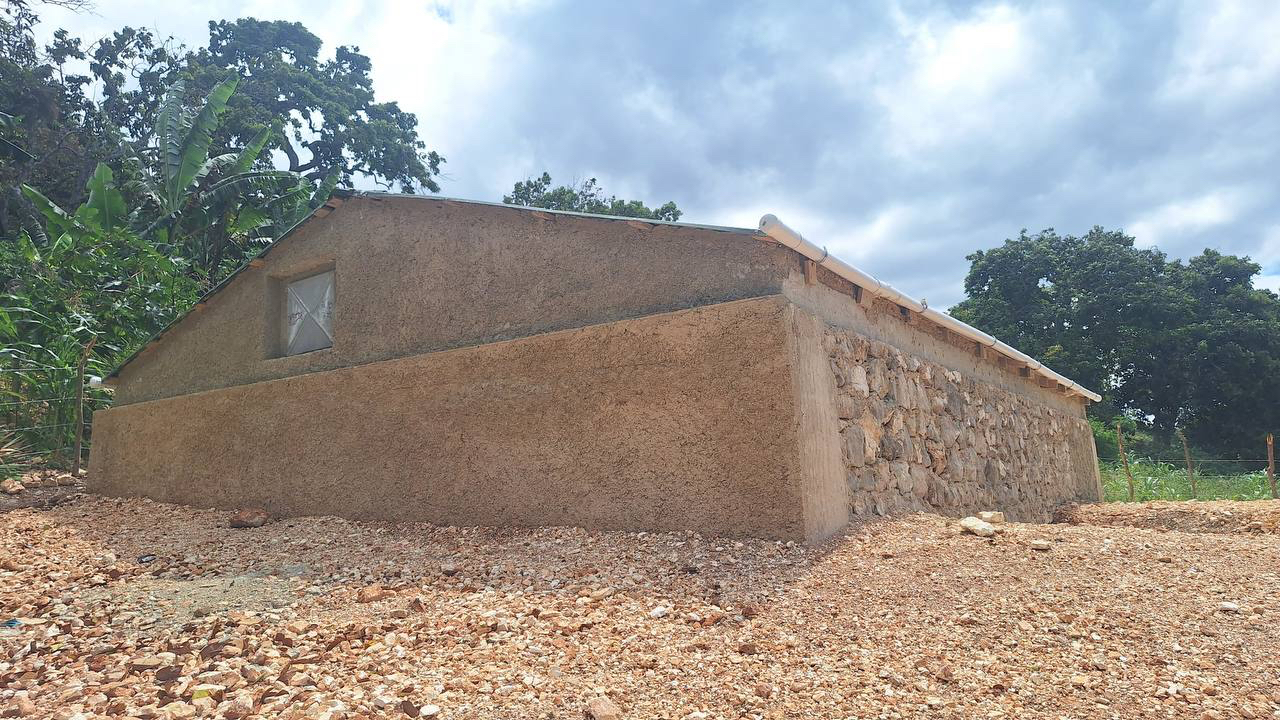
See How Direct, Milestone-Verified Local Infrastructure Works on the Ground in Boucan Ferdinand
Our policy papers argue that local recovery funds should bypass discretionary political pools in the capital and flow directly against verified physical milestones. In the border village of Boucan Ferdinand, 250 core residents (~50 households, 1,200+ regional corridor reach) cut the mountain access road by hand, planted 70,000 nursery trees, and completed the first ~50,000-gallon stone-and-concrete rainwater cistern in a 6-cistern village network (356,600 gallons total).