
Haiti's Election Depends More on ID Cards Than on Gang Territory
Only about 16% of Haitians with a national ID card have registered to vote. Getting cards to 746,000 people still waiting for one could help the July 2027 vote hold.

On Nov. 11, Haiti's Provisional Electoral Council (CEP) had 934,194 voters on its register. By late August, the National Identification Office (ONI) had issued 5,837,560 national ID cards. Put those side by side, and about 16% of card-holders are signed up to vote.
Registration closes on May 20, 2027. That is 190 days after the Nov. 11 count. The first round of voting is now set for July 18, 2027. What happens in those 190 days will tell us more about whether that date holds than any map of gang territory.
One caution: card-holders are a rough stand-in for eligible voters, not an exact count. So treat the 16% as a ballpark figure.
Is the vote really waiting on the gangs?
The common view goes step by step. The Salvadoran-backed offensive and the Gang Suppression Force push gangs back. The CEP then opens registration centers in the cleared areas. Then the vote happens. In this view, the move from Dec. 13, 2026 to July 18, 2027 was a security delay. The answer is more firepower, faster.
If that were true, sign-ups should be speeding up wherever clerks can safely work. Registering people doesn't require a front line. But sign-ups have actually slowed.
By the CEP's published counts, the register reached 628,755 on Sept. 21 and 817,991 on Oct. 13. On Oct. 2, it stood at 728,437. So between Oct. 2 and Oct. 13, it grew by roughly 8,100 people a day. From Oct. 13 to Nov. 11, that dropped to about 4,000 a day. These daily rates are our own math from CEP and press counts. The CEP did not publish them.
What does slower sign-up mean for the election date?
Here is a simple illustration, not a forecast. At 4,000 a day, the register reaches about 1.7 million by May 20. That's roughly 29% of card-holders. At the faster average since July, about 8,200 a day, it reaches about 2.5 million, or 43%.
The CEP's former president talked about a goal of 3 to 4 million voters. Even the hopeful path falls short of the low end.
An election where only 29% of card-holders can vote isn't just a late election. It's one people will fight over. When most people are left off the list, losing candidates get an easy argument that the list was rigged. That includes candidates facing G7 sanctions, and those who simply lose. Whoever controls the CEP's data then controls the story. Quietly, the pressure builds to delay again, or to hold a vote nobody trusts.
Where people live makes this sharper. The Ouest department has about 34% of the population. But on Oct. 13, it had only 134,954 of the 817,991 registered voters, or 16.5%. That's half its fair share. The Ouest is where the gangs are, so security clearly matters there. But it's one department. It can't explain the slowdown across the whole country.
One warning about the data. Rezo Nòdwès lists the 934,194 registered voters next to 1,447,000 "support registrations" and calls the gap between the two lists a mystery. We haven't figured out how those numbers fit together, and we don't use the larger one. Anyone planning rewards based on sign-up numbers should check what's actually being counted first.
Can we actually reach people who fled their homes?
Displaced voters are usually described as impossible to reach: more than a million people scattered by violence. The IOM's Round 14 count is 1.49 million internally displaced people. But by IOM's own breakdown, about 79% of them live outside the capital. Registration centers are open in those areas.
So many displaced people can be reached by a clerk with a laptop and a camera. What's stopping them is paperwork, not fighting.
The Haitian Times reports that 6,583,753 people are on file with ONI, and 5,837,560 cards have been issued. That leaves 746,193 people with an ONI record but no card. You need the card to register to vote. So these are people the government already knows, stuck one document away from the voter list.
Winning ground from gangs won't print them a card. Clearing territory in Artibonite or the Centre does nothing for a displaced family in a host town that has no card to show.
What would a big push to deliver cards cost, and could it fail?
The idea is simple. Combine two PeaceBot governance tools, civil_registry_pop_up and electoral_commission_rebuild, into one joint ONI and CEP drive to hand out cards and sign people up:
- Clear the card backlog. The best price guide is a deal between Japan and the OAS: $3 million for 350,000 biometric cards, or about $8.60 each. For the 746,193 cards not yet delivered, that comes to about $6.4 million. That's roughly HTG 837 million at the central bank's reference rate of 130.73 HTG per dollar. This is our estimate, and it assumes the price per card stays about the same at larger scale.
- Go to where people are. Set up pop-up desks at the 230-plus displacement sites and in the towns around them. Hand people their card and register them to vote in the same visit.
- Post a weekly public scorecard showing sign-ups against card-holders in each department. That way, everyone can see the Ouest gap, and any padded numbers.
- Tie donor payments to results. Release money only if the drive hits at least 8,000 confirmed sign-ups a day. That's the pace the register briefly reached in early October.
We couldn't get PeaceBot's cost and practicality ratings for these tools, so treat them as unrated. The cost estimate above is based only on the Japan and OAS price per card.
The strongest objection is this: maybe the missing cards are bunched up exactly where the government can't go. If many of the 746,193 uncollected cards belong to people in gang-held parts of the Ouest, a desk in a host town won't reach them. Then the 8,000-a-day target is out of reach. A numbers target can also tempt officials to pad the count. The puzzle over "support registrations" suggests that risk is real.
Both concerns are serious. The answer is to reward confirmed fingerprint and photo matches, not raw head counts. And publish the numbers by department, so donors can see whether the problem is logistics or gang control. If the scorecard shows most missing cards are inside gang territory, that is real proof for the security-first view. Right now, nobody is even collecting that proof.
That's the point. Today, people defend or doubt the July date based on gut feeling. If the register passes 2.5 million by May, the date can work. If it crawls along at 4,000 a day, it can't, no matter how the offensive goes. The real countdown is in the CEP's sign-up records, and right now nobody is watching it.
Sources & Background Notes
Mobile pop-up stations for IDs, birth certificates, and basic records issuance.
Technical reconstruction of an independent electoral management body free from political capture
- [7]Haïti Policy House
Interactive Policy Simulators & Decision-Support Portal
Explore STIMPACK's interactive decision-support suite built for diplomats, congressional staff, and researchers—combining real-time open-source intelligence with quantitative security, territorial, and coalition stability simulators:
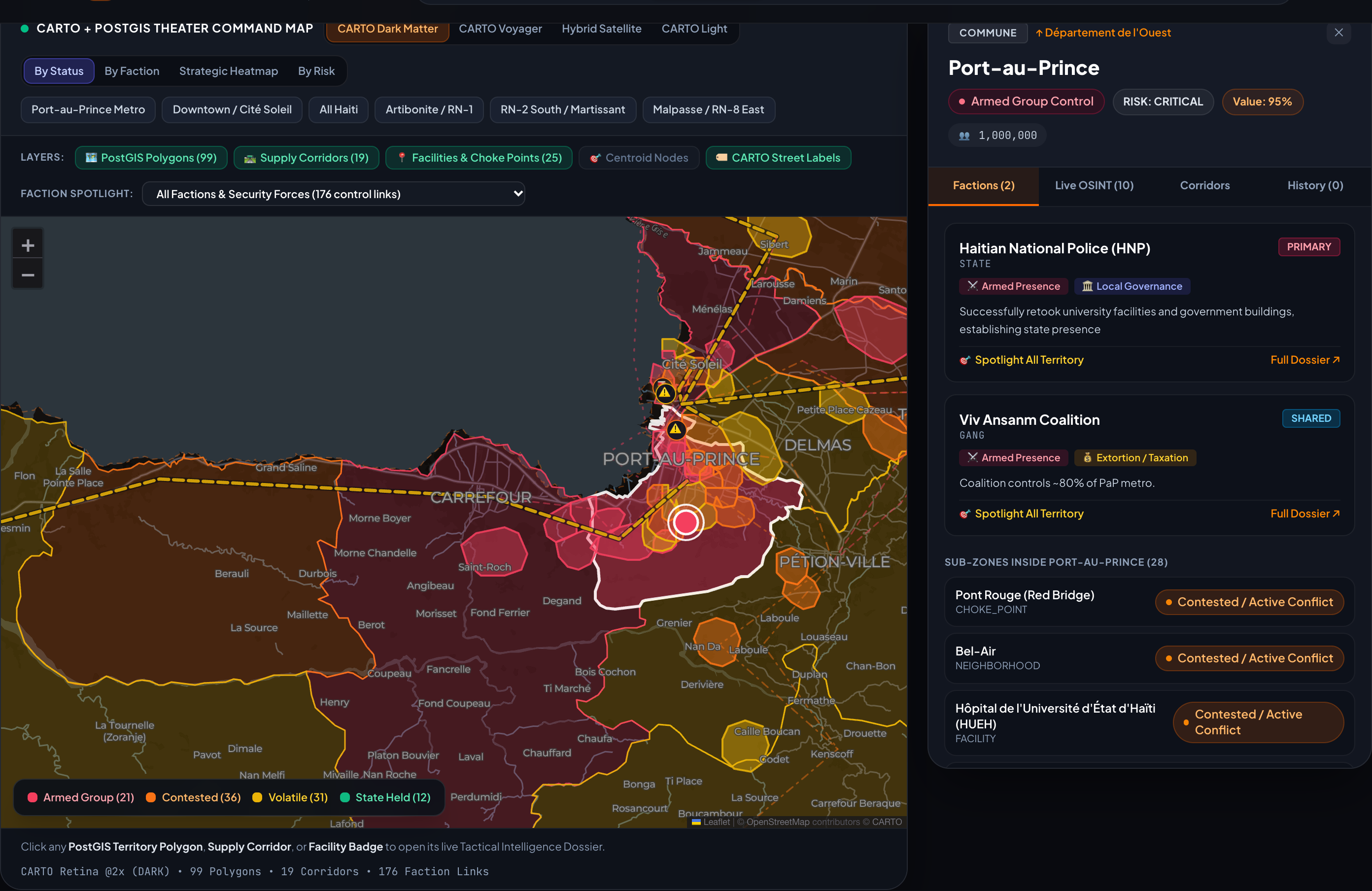
Interactive geospatial control across 100 neighborhoods & highway choke-points (`/monitor/map`).
Force posture & fiscal recovery models (`/security-simulator`, `/tool`, `/tool2`).
Policy Explorer, Coalition Stability Calculator & Force-Directed Network (`/instruments`, `/coalitions`, `/power-map`).
109-page peer-reviewed Haiti Working Group framework & statutory annexes (`reports.stimpack.org`).
All dispatches, actor dossiers, and quantitative models are autonomously generated by STIMPACK AI systems from open-source reporting.
Subscribe to Automated AI Dispatches
Receive automated open-source intelligence digests and Working Group report releases directly in your inbox.
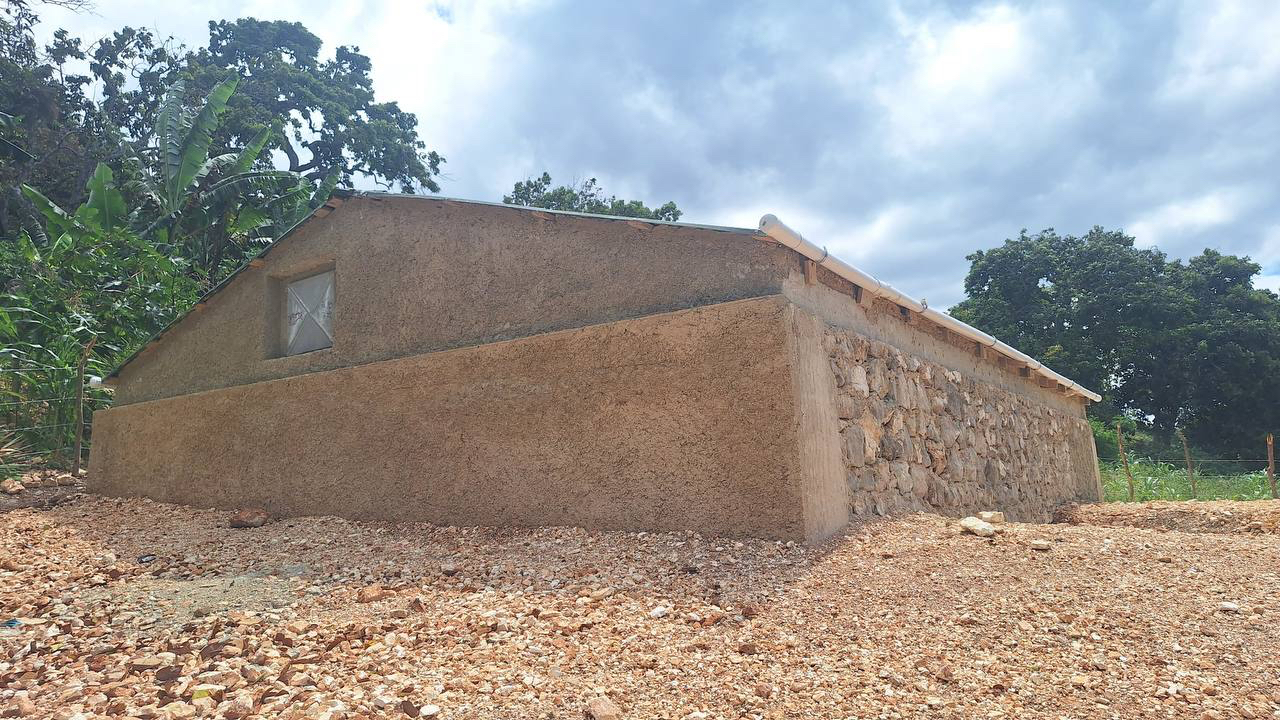
See How Direct, Milestone-Verified Local Infrastructure Works on the Ground in Boucan Ferdinand
Our policy papers argue that local recovery funds should bypass discretionary political pools in the capital and flow directly against verified physical milestones. In the border village of Boucan Ferdinand, 250 core residents (~50 households, 1,200+ regional corridor reach) cut the mountain access road by hand, planted 70,000 nursery trees, and completed the first ~50,000-gallon stone-and-concrete rainwater cistern in a 6-cistern village network (356,600 gallons total).