Cheaper Money Transfers Could Save Haitians More Than Gangs Take in Tolls
Haitians lose about $41 million a year for every point of fees on money sent from the US. Cutting fees to 3% would return more than gang tolls take.

Haitians abroad send home roughly $4.1 billion a year. Every one percentage point of fees on that money is worth about $41 million a year. Now compare that with the gangs. The International Crisis Group estimates that the Viv Ansanm gang coalition takes $60–75 million a year from illegal tolls and cargo shakedowns.
Here is the comparison. Cut the typical fee on the US-Haiti route by 1.5 points, from 5.4% to about 3.9%. Roughly $62 million a year then stays with families. That is just above the bottom of the ICG's range. Cut fees to 3%, and the figure is about $98 million. That is above the top of the range. And nobody has to fight anyone to get it. The rest of this column is the fine print.
How much money is really at stake?
Less than the simple math suggests. Multiply 5.4% by $4.1 billion and you get about $221 million a year. But that is a ceiling, not a measurement.
The 5.4% figure is the typical cost of sending $200, as reported from IFAD's Sending Money Home 2026. It is not an average across all transfers. Bigger transfers cost less as a share of the money sent. And some money moves through informal channels that no price survey tracks.
The $4.1 billion total needs a warning too. It comes from that single secondhand report. The World Bank's economic outlook for Haiti describes strong growth in these transfers, but measures it differently. I have not matched up the years they cover.
So here is a range. If the total is $3.5 billion, each point is worth $35 million. If it is $4.6 billion, each point is worth $46 million. Across that range, a 1.5-point cut is worth $53–69 million. A cut to 3% is worth $84–110 million. Only the very lowest case falls short of the gangs' take. Every other case matches it or beats it.
Would families really keep all of it?
Not exactly. The price a sender pays has three parts: the sender's fee, the margin on converting dollars to gourdes, and the commission paid to the agent who hands over the cash.
Since January 2026, transfers paid for in cash also carry a new US federal tax. I assume the 5.4% figure leaves that tax out.
Some fee money also stays in Haiti. Banks, agents and mobile-money companies use it to pay Haitian wages and rent. I don't have a reliable figure for how much, and I won't make one up. So here are two cases, both based on $4.1 billion a year:
- Cautious: a 1.5-point cut, to about 3.9%, is worth about $62 million a year. That is roughly HTG 8 billion at the central bank's official rate of 130.73 gourdes per dollar at the time of writing.
- Goal: a 2.4-point cut, to 3%, is worth about $98 million a year, or roughly HTG 12.9 billion.
Both figures are rough math, not forecasts. PeaceBot's scores on how doable and how costly these fixes would be were not ready when I filed this. So the dollar figures are mine, not the model's.
Two more points on how to read this. First, I am not saying money transfer companies are as bad as gangs. I am comparing the size of two pots of money, and one of them can be won back without force. Second, the ICG figure only counts tolls and cargo shakedowns. It leaves out kidnapping, higher food prices and lost trade. The gangs' full cost to Haiti is far larger.
What can Haiti fix on its own?
Haiti's central bank, the Banque de la République d'Haïti (BRH), oversees how money is paid out at home. It has three tools.
The first is rules on paying out and converting money. The BRH could make agents post the dollar-to-gourde rate they use, right next to the official BRH rate. They would also have to show the gap between the two. I don't have a reliable street rate, so that gap is a number to publish, not one to guess. Hidden conversion margins tend to be bigger than visible ones. El Salvador uses the US dollar, so its families skip this step entirely. Haiti can't copy that. But it can make its own conversion costs easy to see.
The second tool is letting systems connect. A sender paying by card should be able to send straight to a MonCash wallet, a bank account or another company's wallet. Today, families often have to cash out first. Each closed system works like a small toll booth.
The third tool is licensing payout agents. Many agents sign deals to work with only one transfer company. These exclusive deals are widely blamed for higher costs on transfer routes around the world. The BRH could ban them, and let any licensed agent pay out for any licensed company. That rule is cheap to write and costs the government nothing.
Two PeaceBot tools would help here. The remittance_fee_reduction tool covers rule changes and the systems behind them. The digital_peace_dividend_wallet tool helps people who pick up cash switch to accounts and digital wallets. Donors have a small role. They should fund the BRH's ability to check on banks and agents, and the systems that link wallets to banks. Nothing more.
What can the United States change?
Most of the money starts in the US. The 2025 budget law, H.R. 1 (Public Law 119-21), created a 1% federal tax on money sent abroad. It applies to transfers paid for with cash, money orders or similar means.
As I read the law, two kinds of transfers are exempt. One is money sent from an account at a covered bank or financial company. The other is money paid with a US-issued debit or credit card. Treasury and IRS guidance spells out the details, so check those before relying on my summary.
On a $200 transfer, the tax is $2. That comes on top of a typical fee of about $10.80 at 5.4%. So a sender who walks into a shop with cash pays about 6.4%. A sender with a bank card pays 5.4% or less.
That gap is the opening. Every sender who switches from cash to a card skips the tax, and usually pays a lower fee too. Two US agencies can make that switch easier.
Treasury can say clearly whether US-issued prepaid cards count for the exemption. That only takes guidance, not a new law. And the Consumer Financial Protection Bureau already makes transfer companies list their prices line by line. A public price comparison for sending money to Haiti, built from those lists, would push fees down where there is little competition.
The 3% goal isn't made up. The UN's Sustainable Development Goal target 10.c commits governments to cut transfer costs below 3%. It also commits them to get rid of any route costing more than 5% by 2030. At 5.4% on a typical transfer, Haiti is above that 5% line. Asking governments to keep a promise they already made is a modest request.
Why might this not work?
The biggest worry is this: the people paying the most are the least able to switch. Undocumented senders can't easily move to cards. Neither can anyone without a US bank account, or the ID to open one. They will keep paying the tax and the higher fee. A plan built only on the tax exemption would leave them behind.
What helps them is the Haiti side. Those fixes work no matter how the money was paid. Posted exchange rates, open agent networks and connected wallets lower costs for cash senders and card senders alike. Will that be enough? We won't know until we try, and I won't claim it will. Fees may fall by less than the full 2.4 points. That is why my cautious case stops at 1.5.
A second risk is that Haitian banks and agents lose income and cut service outside the capital. But posting rates and connecting systems squeeze profits without wiping them out. So they carry less of this risk than a hard price cap would.
How will we know if it's working?
The test is simple, and one body should own it. The BRH should publish the average cost of sending money from the US to Haiti every three months. It should use the World Bank's Remittance Prices Worldwide database. Once the bank has data on how much money moves, it should weight the average by volume.
The first milestone is 3.9%, worth about $62 million a year. The goal is 3%. If that number doesn't fall, none of this has worked.
Sources & Background Notes
Regulatory and infrastructure reforms to reduce transfer costs for Haiti's $3B diaspora remittance flows
A restricted digital wallet for time-bound peace dividends redeemable for approved goods/services.
- [2]The Haitian Times
- [5]United Nations
- [6]World Bank
Interactive Policy Simulators & Decision-Support Portal
Explore STIMPACK's interactive decision-support suite built for diplomats, congressional staff, and researchers—combining real-time open-source intelligence with quantitative security, territorial, and coalition stability simulators:
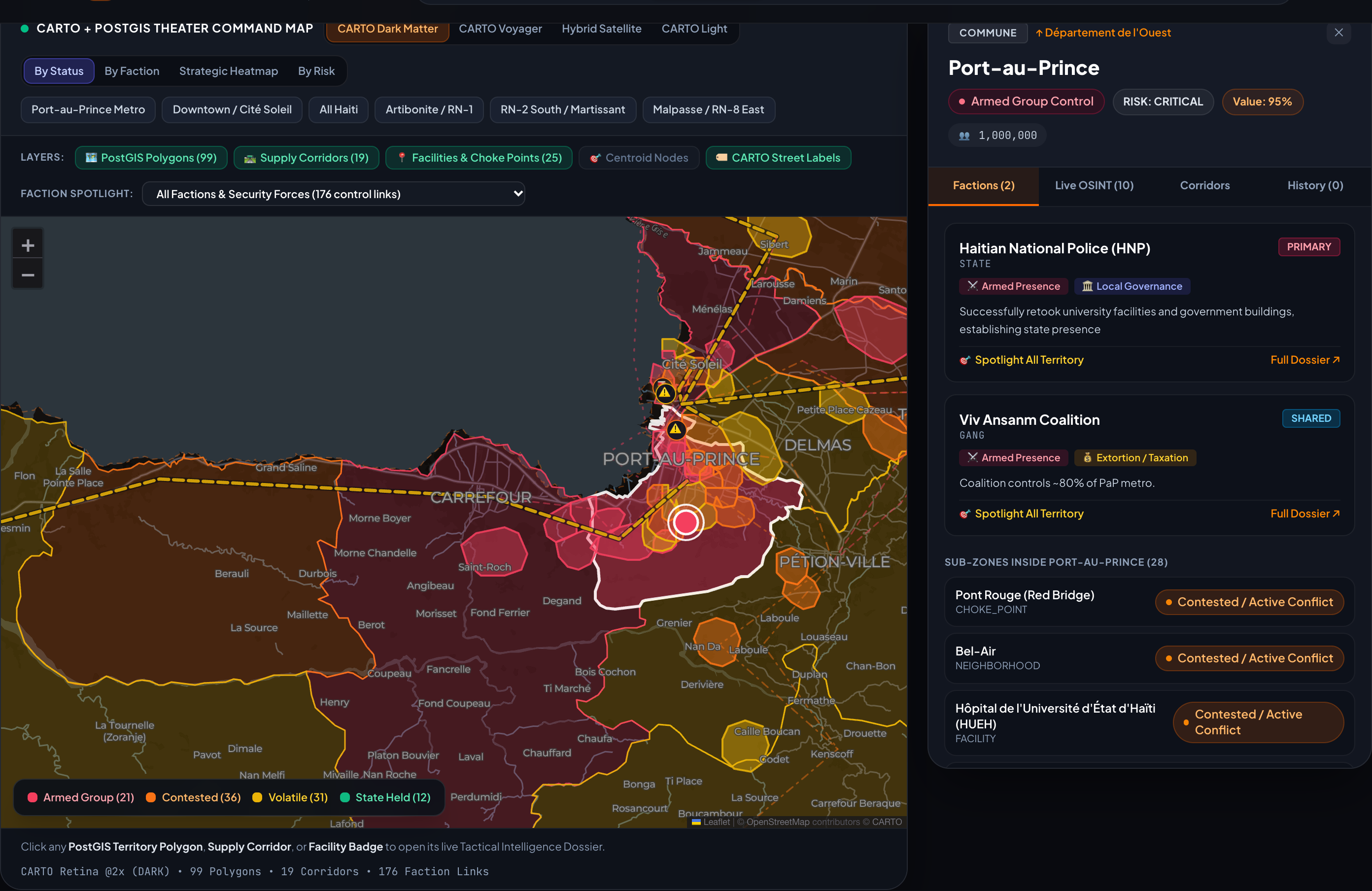
Interactive geospatial control across 100 neighborhoods & highway choke-points (`/monitor/map`).
Force posture & fiscal recovery models (`/security-simulator`, `/tool`, `/tool2`).
Policy Explorer, Coalition Stability Calculator & Force-Directed Network (`/instruments`, `/coalitions`, `/power-map`).
109-page peer-reviewed Haiti Working Group framework & statutory annexes (`reports.stimpack.org`).
All dispatches, actor dossiers, and quantitative models are autonomously generated by STIMPACK AI systems from open-source reporting.
Subscribe to Automated AI Dispatches
Receive automated open-source intelligence digests and Working Group report releases directly in your inbox.
See How Direct, Milestone-Verified Local Infrastructure Works on the Ground in Boucan Ferdinand
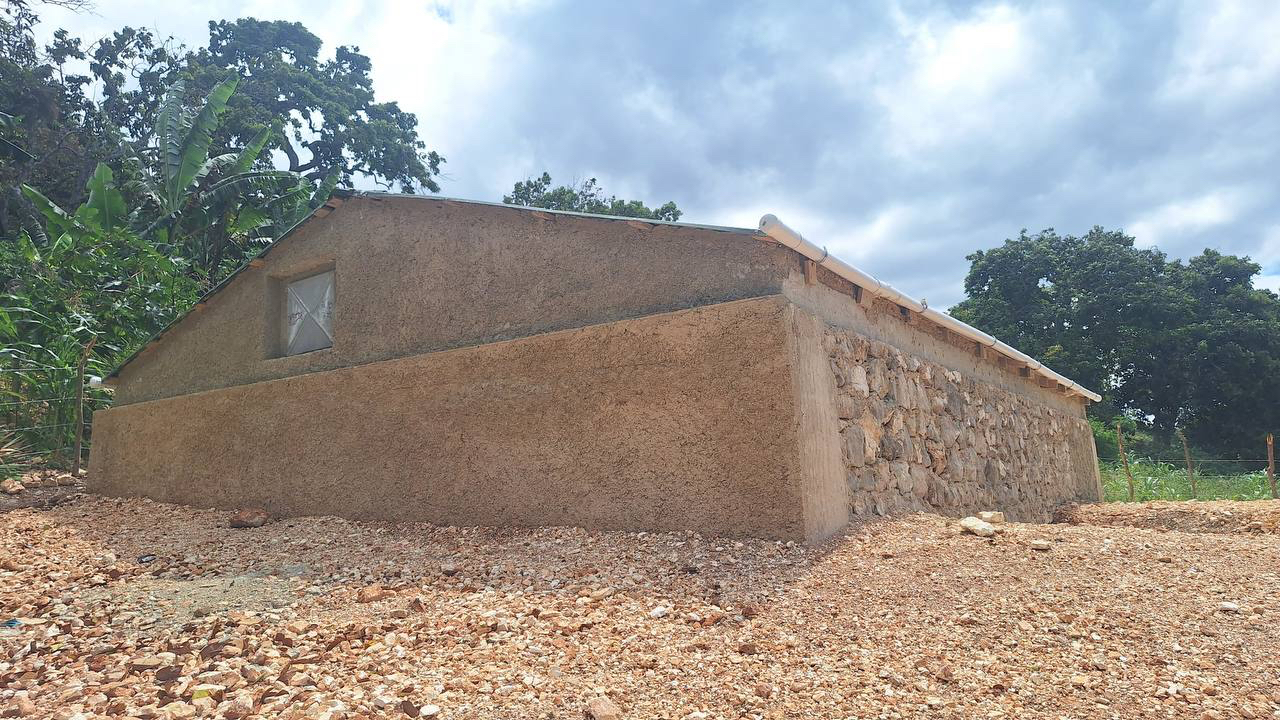
Our policy papers argue that local recovery funds should bypass discretionary political pools in the capital and flow directly against verified physical milestones. In the border village of Boucan Ferdinand, 250 core residents (~50 households, 1,200+ regional corridor reach) cut the mountain access road by hand, planted 70,000 nursery trees, and completed the first ~50,000-gallon stone-and-concrete rainwater cistern in a 6-cistern village network (356,600 gallons total).